Friday, May 29, 2009

Way down in Mississippi / where the pine trees grow / deep in Jones County / where the leaf river flows

In May of 2008 I posted the transcript of a Q&A I conducted with Victoria Bynum, regarding her fascinating book, The Free State of Jones: Mississippi's Longest Civil War (Chapel Hill: UNC Press, 2001). The exchange took place on-line, in the Civil War Forum, October 25, 2001.

It's an amazing story, and well told. Recently, I was pleased to learn from Kevin Levin at Civil War Memory that Professor Bynum has a blog dedicated to the subject or more accurately, to "
southern dissenters of the nineteenth century," to include the Knights of Jones County, and other renegades. What a perfect venue for bringing out more information and tantalizing tidbits. Kevin also made mention of a new book on the subject, by Sally Jenkins and John Stauffer, which had escaped my notice until now.

Check out Bynum's blog, but be sure to also visit the affiliated website, www.renegadesouth.com, if only to hear Doctor G sing "Jones County Jubilee." That will put you in the mood for some reading on Newt (pictured above) & Rachel Knight.

Dr. Bynum is also the author of Unruly Women: the Politics of Social and Sexual Control in the Old South (UNC Press, 1992), and Southern Communities at War.

Thursday, May 28, 2009

The Making of the Revised Edition of Gettysburg: A Battlefield Guide

Civil War blogging doesn't get any better than the recent serial entries by Mark Grimsley (at Civil Warriors) on the intriguing process of updating his (and Brooks Simpson's) Gettysburg battlefield guide. See part 1 of "Letting the Ground Argue" here. Part two here. It's a real treat to read a working historian's musings from the field. The exercise imbues an inherently casual medium with a unique and powerful value. Bison Books should consider publishing links to these the making of entries.

Tuesday, May 19, 2009


David Herbert Donald, 1920–2009

"Professor Donald taught that truth comes before showmanship. Without theorizing or bloviating, and simply by example, he taught that a meticulous commitment to accuracy is the historian's primary obligation."
— Gil Troy (full essay)
NYT obituary

Monday, April 27, 2009

On this day, 144 years ago. . .


I swam about four miles and came to an island covered with timber. I climbed a tree, and the water surrounding it was about ten feet deep. Now, when I hear persons talking about being hard up, I think of my condition at that time—up in a tree in the middle of the Mississippi River, a thousand miles from home, not one cent to my name, nor a pocket to put it in...

A. C. Brown, 2nd Ohio Volunteer Infantry, describing how he survived the Sultana disaster

Tuesday, April 21, 2009

The Walk to the Sea

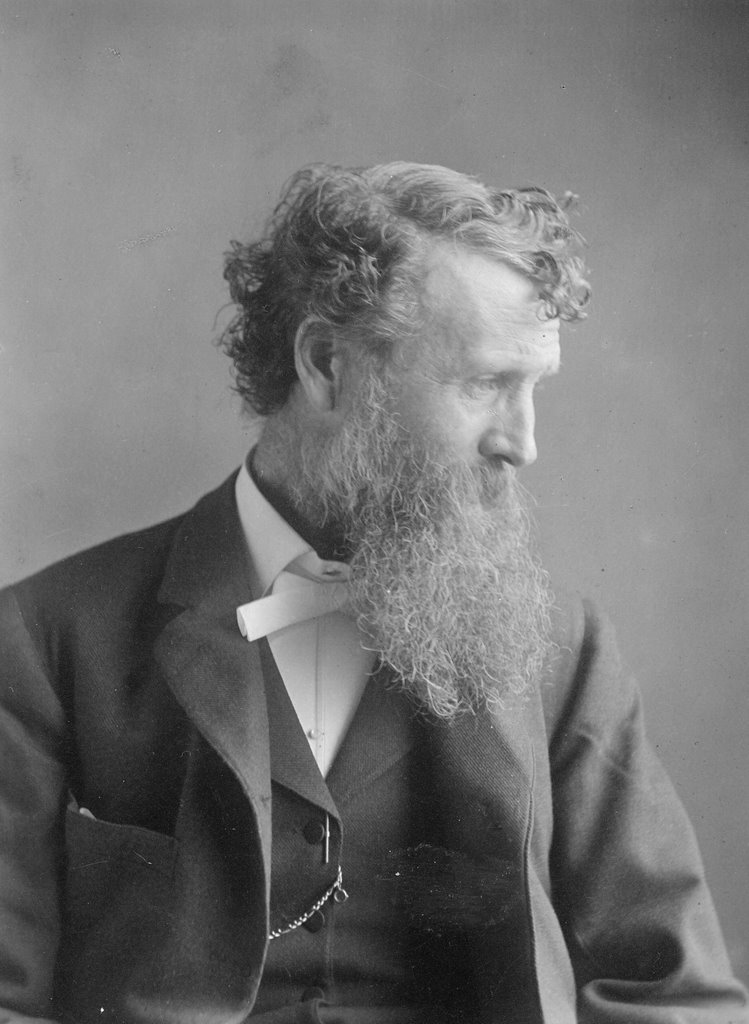
In honor of John Muir's birthday today, I am reaching back three years into the archives to pull out one of my favorite, early posts in this blog. In 1867, Muir took a 1,000-mile walk to the Gulf, through the heart of the former Confederacy, and here are some passages from his notes of that trip, which were eventually published.


I was slow to come to appreciate the magnitude of John Muir's contribution to conservation, his role in the early establishment of the national park system, his stature as naturalist par excellence. Until I moved to San Francisco in my early 20s, Muir had not even been on my radar. Later, as I came to be captivated by the history and geography of the Sierra Nevada Mountains, Muir became such a towering figure, he was unavoidable. Reading of his adventures as a mountain man — tales of solitary sojourns in the high country expressing unabashed, poetic reverence for sacred wilderness — always makes me itch to break out the tent, gather the Coleman products, and head for the woods.


I was also slow to get around to Muir's early writings. Imagine my delight, then, when I finally came across the unpolished notes of his 1867 walk across the South, from Louisville, Kentucky to Savannah, Georgia, and on into Florida A Thousand-Mile Walk to the Gulf (Boston and New York: Houghton Mifflin Company, 1916). Muir embarked on his journey to look at the plants "grass, weeds, flowers, trees, mosses, ferns," and he comments on them passionately, and at length. But he also gives a sense of the ravaged, post-war South. Muir speaks to many freedmen along the way, enjoys the hospitality of residents in the heart of the old Confederacy, and encounters highwaymen in a largely lawless landscape where every person met on the road is a potential threat.


Happily, the entire book can be read at the Sierra Club site, here (follow links to "Books by John Muir"). I've excerpted a number of interesting passages that present observations of the Civil War South, two and a half years after the end of hostilities.


September 6. Started at the earliest bird song in hopes of seeing the great Mammoth Cave before evening. Overtook an old negro driving an ox team. Rode with him a few miles and had some interesting chat concerning war, wild fruits of the woods, et cetera. "Right heah," said he, "is where the Rebs was a-tearin' up the track, and they all a sudden thought they seed the Yankees a-comin', obah dem big hills dar, and Lo'd, how dey run." I asked him if he would like a renewal of these sad war times, when his flexible face suddenly calmed, and he said with intense earnestness, "Oh, Lo'd, want no mo wa, Lo'd no." Many of these Kentucky negroes are shrewd and intelligent, and when warmed upon a subject that interests them, are eloquent in no mean degree.

September 7. Left the hospitable Kentuckians with their sincere good wishes and bore away southward again through the deep green woods. In noble forests all day. Saw mistletoe for the first time. Part of the day I traveled with a Kentuckian from near Burkesville. He spoke to all the negroes he met with familiar kindly greetings, addressing them always as "Uncles" and "Aunts." All travelers one meets on these roads, white and black, male and female, travel on horseback. Glasgow is one of the few Southern towns that shows ordinary American life. At night with a well-to-do farmer.

As I turned to leave, after bidding her good-bye, she, evidently pitying me for my tired looks, called me back and asked me if I would like a drink of milk. This I gladly accepted, thinking that perhaps I might not be successful in getting any other nourishment for a day or two. Then I inquired whether there were any more houses on the road, nearer than North Carolina, forty or fifty miles away. "Yes," she said, "it's only two miles to the next house, but beyond that there are no houses that I know of except empty ones whose owners have been killed or driven away during the war."

Met a young African with whom I had a long talk. was amused with his eloquent narrative of coon hunting, alligators, and many superstitions. He showed me a place where a railroad train had run off the track, and assured me that the ghosts of the killed may be seen every dark night.

Had a long walk after sundown. At last was received at the house of Dr. Perkins. Saw Cape Jasmine [ Gardenia florida ] in the garden. Heard long recitals of war happenings, discussion of the slave question, and Northern politics; a thoroughly characteristic Southern family, refined in manners and kind, but immovably prejudiced on everything connected with slavery.

The family table was unlike any I ever saw before. It was circular, and the central part of it revolved. When any one wished to be helped, he placed his plate on the revolving part, which was whirled around to the host, and then whirled back with its new load. Thus every plate was revolved into place, without the assistance of any of the family.

Toward evening I arrived at the home of Mr. Cameron, a wealthy planter, who had large bands of slaves at work in his cotton fields. They still call him "Massa." He tells me that labor costs him less now than it did before the emancipation of the negroes. When I arrived I found him busily engaged in scouring the rust off some cotton-gin saws which had been lying for months at the bottom of his mill-pond to prevent Sherman's "bummers" from destroying them. The most valuable parts of the grist-mill and cotton-press were hidden in the same way. "If Bill Sherman," he said, "should come down now without his army, he would never go back."


On no subject are our ideas more warped and pitiable than on death. Instead of the sympathy, the friendly union, of life and death so apparent in Nature, we are taught that death is an accident, a deplorable punishment for the oldest sin, the arch-enemy of life, etc. Town children, especially, are steeped in this death orthodoxy, for the natural beauties of death are seldom seen or taught in towns.


Of the people of the States that I have now passed, I best like the Georgians. They have charming manners, and their dwellings are mostly larger and better than those of adjacent States. However costly or ornamental their homes or their manners, they do not, like those of the New Englander, appear as the fruits of intense and painful sacrifice and training, but are entirely divested of artificial weights and measures, and seem to pervade and twine about their characters as spontaneous growths with the durability and charm of living nature. In particular, Georgians, even the commonest, have a most charmingly cordial way of saying to strangers, as they proceed on their journey, "I wish you well, sir." The negroes of Georgia, too, are extremely mannerly and polite, and appear always to be delighted to find opportunity for obliging anybody.

The traces of war are not only apparent on the broken fields, burnt fences, mills, and woods ruthlessly slaughtered, but also on the countenances of the people. A few years after a forest has been burned another generation of bright and happy trees arises, in purest, freshest vigor; only the old trees, wholly or half dead, bear marks of the calamity. So with the people of this war-field. Happy, unscarred, and unclouded youth is growing up around the aged, half-consumed, and fallen parents, who bear in sad measure the ineffaceable marks of the farthest-reaching and most infernal of all civilized calamities.

Friday, April 10, 2009

Groom adds voice on famous siege

[from an article today at Salon.com]

By WALTER PUTNAM Associated Press Writer

Apr 10th, 2009 "Vicksburg 1863" (Alfred A. Knopf, 496 pages, $30), by Winston Groom: Many books have examined the Union siege of Vicksburg, Miss., over the years, but that's no reason Winston Groom should not lend his unique voice to the subject -- one of the most critical campaigns of the Civil War.

The Alabama author best known for his novel "Forrest Gump," brought to life by Tom Hanks in the 1994 movie, has considerable experience and expertise in both fiction and nonfiction.

With "Vicksburg 1863," Groom brings the novelist's touch to history, personalizing characters such as Union Gens. Ulysses S. Grant and William T. Sherman, as well as Jefferson Davis and Gen. Joseph E. Johnston of the Confederacy, in an easily relatable way for the average reader.
=======================

You can read the full article here. Historical fiction set in the American Civil War has long been an interest of mine -- if only more of it were readable or interesting. For every Cold Mountain or Killer Angels, there are twenty Gods and Generals'.

I was struck by Mr. Bloom's McMurry-esque comments on the relative importance of Gettysburg versus Vicksburg in the fortunes of the war. He goes so far as to say the war was over when Vicksburg fell.

The author noted that Vicksburg fell into Grant's hands the same day that the North prevailed in the battle of Gettysburg, ending Confederate Gen. Robert E. Lee's lone invasion of Union territory. He said Gettysburg, though, pales in comparison to Vicksburg.
"In Vicksburg, not only did you lose your whole Army, you also lost the entire Mississippi River valley and half of your territory," Groom said.

"The South was almost mad to continue the war after that," he said, adding that President Abraham Lincoln would have provided much more favorable terms had the Confederates ended it then rather then almost two years later.


Saturday, April 04, 2009

a number of us set out last Sunday morning, on a spectacular Shenandoah Valley day

[above: historic Pritchard House on the Kernstown Battlefield]

With Scott Patchan's Cedar Creek issue of Blue & Gray in hand, a number of us set out last Sunday morning, on a spectacular Shenandoah Valley day, to visit the parking lots, ditches, and medians where interpretation of that battle is most easily conveyed. Best of all, however, was the stop at Belle Grove, where rolling pastures and lines of sight made it somewhat easier to envision the events of 1864, the quarry notwithstanding. Our guide eschewed a visit to the visitor center as part of one of the preservation world's ongoing feuds.
All in all, it was another memorable gathering for the intrepid members of The Civil War Forum. All of this week, we've been voting on next year's (Western) venue, and early returns point to New Orleans. Here are a few photos from last week (click to enlarge):


Above
, site of John Brown's scaffold, Charles Town, West Virginia; below, Kennedy Farm where Brown plotted, near Harpers Ferry


left: Steve Meserve,
inveterate tour guide,
historian par excellence,
misguided football fan


Scott Patchan, and Steve


Above: The Pritchard House

Saturday, March 28, 2009

saturday road notes


Lucked out on the rain again today, making for some fine touring. It's a powerful thing to see for the first time the results of preservation efforts you participated in from afar, years ago. The Third Winchester tracts are impressive. Likewise Fisher's Hill. This second, chock-full day wrapped up at Toms Brook. If I'm not mistaken, we walked through part of a dedicated frisbee-golf course to get to the marker. Scott Patchan regaled the attendees this evening with a detailed examination of the life of Phil Sheridan. Many folks are heading home in the morning, but about 20 of us will spend four hours at Cedar Creek with Scott. Shoot -- I forgot to go to bed again.

friday road notes


Two experiences in Virginia Civil War history on the same day illustrate two ends of a spectrum. We got out our box lunches near some markers at the heart of the Rutherford's Farm/Stephenson's Depot battlefield. These markers are on an island between the highway and the new Lowe's parking lot. It is a sea of striped blacktop now. By contrast, the visit to the Cool Spring battlefield was a bucolic walk through a pristine pasture, to the banks of the Shenandoah. Favorite stop of the day: the 1854 Pritchard House on the Kernstown battlefield. All praise due to the Kernstown Battlefield Association. Photos to follow. The evening was capped off nicely with a very entertaining and informative talk by Stevan Meserve on Tom Rosser.

Thursday, March 26, 2009

thursday road notes


A rainy day in Winchester and environs. At noon, about 20 of us carpooled over to Charles Town, West Virginia for a stop at the Jefferson County Museum -- they've got quite an impressive collection, including some nice Civil War material, and John Brown-related artifacts. Perhaps most impressive is the wagon that carried Brown to the gallows.
Following historian Steve Meserve, we walked past the prosecuting attorney's home to a slightly newer iteration of the old court house where Brown was tried. Then we drove to the gallows site, and finally passed through lovely forlorn Harpers Ferry to the Kennedy Farm, where Brown gathered his weaponry and plotted his holy insurrection.


Back at Winchester it was time to greet old friends and meet some new ones in the Lord Fairfax Room. Guide and speaker Scott Patchan made his appearance, and after all enjoyed a hearty repast, Scott set the stage for the next two days of tours, helping us get our minds around the expansive, overlapping operations of that bloody 1864 Shenandoah summer.


Time to get some zzz's now. The trouble with flying from the West Coast to the East -- for night owls like me -- is that even if you go to bed early, it's still way too late. It was worth it, though. As I was typing this I got to see the Baby Ruth scene from Caddyshack one more time.

John Hope Franklin, R.I.P.


Saturday, March 07, 2009

13th Civil War Forum Battlefield Conference


THE 1864 SHENANDOAH VALLEY CAMPAIGN

We have 43 people signed up for what promises to be another deeply informative and memorable series of tours and talks later this month, headquartered in Winchester. There are still several seats available, if you're interested in attended. It's a fun group of peoplemany who have been to most or all of the past conferences, some who signed on in recent years, and always a handful of welcome first-timers.


It's a great deal: $275 for two full days of bus tours (with box lunches), two half days of tours by carpool, and three evening buffet dinners with after-dinner presentations by our historians Scott Patchan and Stevan Meserve. The Civil War Forum continues to sponsor the best tours, with the best guides, for as low a cost as possible. Anything left over goes to The Civil War Preservation Trust.


Among other sites, we'll spend much of our two days of bus tours with Scott visiting Cool Spring/Snickers Gapincluding a walk down to the river and a visit to the Parker House; 2nd Kernstown Battlefield, 3rd Winchester Battlefield, Fisher’s Hill and Tom's Brook. On Sunday morning we'll finish up with four hours at Cedar Creek.


For early arrivals, we have an optional 4-hour outing planned for Thursday afternoon to Charles Town, WV to visit John Brown-related sites, including the Kennedy Farm, where Brown and his men hid out while preparing their raid, the Jefferson County Museumwhose collection includes the Stuart Horse Artillery flag, John Brown pikes and memorabilia, and the wagon that took Brown to the gallowsthe courthouse where Brown was tried, and the gallows site, plus a walking tour of the town. Our guide for Thursday will be Stevan Meserve, whose stellar research isn't limited to Loudoun County, the subject of a nice Civil War history he published last year.

For registration information and updates, click here.

Thursday, March 05, 2009

finger-lickin' dead

"It's about the torment of a
southern officer who lost everything"

Mel Gibson discusses trailer for his new
Civil War movie on the Jimmy Kimmel show

(sent to me by Nita)

Monday, March 02, 2009

The Onion on the The Kindle


(click on image to enlarge)

Yale without the homework


I bookmarked this site some time agomaybe after seeing notice on Kevin Levin's blogand tonight I took a little time to investigate. Yale is offering this free, introductory course from Professor David Blight spanning the entire Civil War era, antebellum through Reconstruction. I am intrigued by how various top-flight historians choose to condense such a monstrous topic into a series of distinct lectures, each with a beginning and an end. In this case I have high hopes for many succinct summaries of Blight's unique analysis, but will settle for an utterly masterful synthesis of the work of others. Short of that, I'll give thanks for a series of refreshing naps. It's a win-win, and the price is right.

Someday I'll check out the 48-part lecture series by Gary Gallagher, on sale at the teaching company for $250 (audio download) or DVD ($519), but if I had a few hundred extra bucks in my pocket today, I'd have bought a
Kindle by now.

In the meantime, this series of lectures by Professor Blight is just what the doctor ordered.
Back in October of 2007, I posted a blog entry on iTunes U, highlighting the selection of complimentary downloads from various prominent universities giving something back to the community. I'm sure the offerings have grown considerably by now, and the "Open Yale Courses" series is probably listed there. You can also download directly from the Yale site. I love the flexibility they offer with high bandwidth (500 MB), medium bandwidth (200 MB), and simple audio MP3's (60 MB).

Tooling down the freeway with the volume cranked up on lecture 21, "Andrew Johnson and the Radicals," is just about as nerdy as you can get with digital media, but someone's got to do it. If not you, then who? If not now, then when? [click on the image below for a more readable view]


From the Yale site:

About Professor David Blight

David W. Blight is the Class of 1954 Professor of American History and Director of the Gilder Lehrman Center for the Study of Slavery, Resistance and Abolition at Yale University. He is the author of numerous books, including A Slave No More: Two Men Who Escaped to Freedom, Race and Reunion: The Civil War in American Memory (for which he received the Bancroft, Abraham Lincoln, and Frederick Douglass prizes), and Beyond the Battlefield: Race, Memory, and the American Civil War. He is also the co-author of the bestselling American history textbook, A People and a Nation.


Friday, February 27, 2009

A book-lover's gadget lust


(you always hurt the one you love)

This evening, over at Rene Tyree's fine Wig-Wags blog, I read a little mini-review of Amazon's new Kindle 2 device, which only cemented my intense interest in one. My wife never reads this blog, so I can casually admit that I have been planning to purchase the Kindle 2 (now priced at $359) since the first announcement, but in good conscience have to pay a couple bills first, like the overdue registration on the family vehicle.

The design looks superb, and it sounds like they've really tweaked the features nicely since the first iteration. Like most people reading this blog, I love the feel of a bookin fact, love to line the walls with thembut I love gadgets, too, and this is a gadget with books inside it. If I may quote Liz Lemon on 30 Rock, "I want to go to there."

I am one of those ridiculous people who frequently carries 2 or 3 books to work and back every day, with another little mini library in the back seatjust in case I have 30 minutes over lunch to read, I want to make sure the right book is on hand. Of course I never read books at lunch time. Ever. Instead, I spend those precious minutes reading print-outs of favorite columnists and blogs. But if it were that convenient to carry 3 or 4 books wherever I went (to say nothing of dozens), I would delve into one with even 10 or 15 minutes to spare.

And there's the beauty of the Kindleyou can have a number of current books at hand, and your full complement of blogs and online newspapers and magazinesall packed into one handy device.

Some have criticized it as another dagger in the heart of the publishing industry (just as Amazon itself is a sword to the neck of independent booksellers). I think there's some truth to that, and it saddens meand alarms me, since I work for a publisherbut, Dylan was right, the times they are a changin'.

The publishing industry, with some exceptions, is in dire straits, and the daily news seems always now to contain one story on the demise of books. Last week, the new issue of Harper's arrived with its cover story on "The Last Book Party, Publishing Drinks to a Life After Death," and a couple days ago the local paper, the San Francisco Chronicle, ran a death knell piece entitled "Book publishers, R.I.P.? In this economy, it's tougher than ever to sell books." Yesterday the Chroniclethe 12th most-read paper in the countryannounced that they would cease publication if they could not get major labor concessions, or a buyer. Today, we hear that the Rocky Mountain News is shutting its doors. It's a sad thing to behold.

But the dissemination of information is not dying, it's growing exponentially. The publishing industry is going through a metamorphosis, and nothing is going to stop that. Still, I don't want to read books off an electronic reader at home. I want to read a book. I like the fact that I can conduct searches in the Official Records online, then pull the relevant volume off the shelf to read in a comfortable chair. And though I'm guilty of letting my newspaper subscriptions lapse in favor of free online content on a 20" iMac screen, I still purchase papers on the street, if only to have the sports section while I eat a sandwich.

Books aren't going away anytime soon, but the traditional models for printing and selling them are giving way to something new. The company I work for is among the trailblazers in that brave new world, with innovations like iChaptersthe textbook publishers answer to iTunes. I think some Science Fiction visionaries get it just about right. In "Star Trek, the Next Generation" (since I'm already married, it is safe to make a Star Trek analogy), all manner of data is online and instantly accessible on servers with unlimited space and terminals in every room, but when Captain Picard wants to relax in his quarters with a little Victor Hugo, he pulls a leather-bound volume off the shelf. It might be a print-on-demand leather volume, but there will be always be a model to accommodate printed copies of something you want to read.

The Kindle looks to be perfect for day-to-day outings. Since it also can read to you, we haveas far as I knowthe first scenario in which you could read a chapter of a book during some daily downtime, then have it read aloud to you while you're driving homeas an audiobookthen pick up your reading where you left off when you head off to bed that night. You can switch between print and audiomaintaining a steady progression through the book in your limited free time. Is it just me, or is that a major breakthrough? We have so little time to read these days as it is.

It's ideal for little outings where I find myself with some time to kill, ideal for the train, ideal for airplane tripswhere I could pack books, magazines, and blogs into a single tablet. That will free up space in my carry-on for whatever obscure Civil War book I'm reading, which probably won't be available as a Kindle download.

Funny, I never had the slightest interest in early versions of electronic readers, but this one is cool. Backlighting that gives the appearance of a regular printed page is everything. I see that it already accommodates MP3s, but I hope that it remains a dedicated device for reading (seems inevitable that they'll add email and internet access at some point). Already, Amazon has said they'll have an App for the iPhonealso a neat idea, but I won't read a book off a small screen.

Since "Bibliophiles" is in the title of this blog, I hope you'll forgive this little digression into gadget-lust.


February 27, 2009 addendum to the above posting—Kindle controversy: Civil War Bookshelf made mention of the Author's Guild objections to the Kindle 2, expressed in a Roy Blount, Jr. NYT editorial, and this Business Week rebuttal.

Thursday, February 26, 2009

Google Earth Quiz Number Two

A little over a year ago, I posted a series of photos from Google Earthsatellite views of Civil War battlefieldsand invited people to try to identify as many as possible. If you missed it, the Quiz can be found here. And the answers to the Quiz are here. It's a very different perspective than you're used to, but many of you are so oriented toward maps in studying Civil War battles, the topographical clues soon lead to recognition. I had planned to do a second quiz long before now, and the good people over at TOCWOC put it back into mind with their posting of coordinates for various battlefields.

For Quiz Number Two, I've given you six photos of battlefields already lost to development. This makes it a little more challenging, since familiar battlefield landmarks are non-existent. To aid your efforts, I've given you additional (easy?) clues in the accompanying captions, including whether it's Eastern or Western Theater, and some modern roadways. If you're a veteran of organized Civil War campaign tours, some of these should jump right out at you. Of course, if you live in one of these areas, that should help too.


Repeating a passage from the last time around:
Post your answers as comments to this blog entry, and in a day or two I'll identify each image, and post some maps and other photos to show how the fighting transpired, or how the troops were aligned in these landscapes. I'll also heap plaudits upon the winner, if there is one. Click on each image for a larger view. Good luck.

No. 1:
The tiny yellow pushpin in the center shows all that's left of this Northern Virginia battlefield. The large diagonal road above is U.S. 50. The large diagonal road below it is Interstate 66.


No. 2:
The pushpin in the center denotes the site where a Union general was killed in a western battle. That big road, Interstate 20, was not there at the time—Sherman could have made good use of it.


No. 3:
On this Tennessee hill, the Federals broke through the Confederate left, and it was all downhill for the Rebels after that. The hill was renamed for a Confederate Colonel who died there.


No. 4:
The fort on this site was at the center of the Confederate line in a June, 1864 battle. Federal troops under David Hunter failed in their hours-long assault against this position. I've left the road names visible, guessing that most people are not that familiar with this neighborhood. Note some of the street names: Pennsylvania, Rhode Island, Connecticut, Vermont, New Hampshire. Cruel Reconstruction joke?


No. 5:
Federals in the Western Theater captured this Confederate fort, which is now home to the fishes. It was wet at the time of the war, but not this wet.


No. 6: Now a historic ghost town in the Deep South, somewhere near the center of this photo is the site of a POW camp for Union soldiers, whose misery was compounded every time the river left its banks.

Saturday, February 21, 2009

Wabash Mashers, 1864


Conan O'Brien called this one his favorite piece from his long-running "Late Night" show, a visit to the Old Bethpage Village Restoration on Long Island where people play "old time base ball," 1864 rules. Watch as Conan talks trash with the players of the day, and makes his move on a Civil War wife whose husband is off at war.

The calendar at Old Bethpage Village lists a number of baseball games this coming June and July, for anyone interested.

Thursday, February 12, 2009

Happy Birthday to two towering figures. . .

the following snippet is from "Who was more important, Lincoln or Darwin?" by Malcolm Jones, Newsweek, July 2008.


As soon as you do start comparing this odd couple, you discover there is more to this birthday coincidence than the same astrological chart (as Aquarians, they should both be stubborn, visionary, tolerant, free-spirited, rebellious, genial but remote and detached—hmmm, so far so good). Two recent books give them double billing: historian David R. Contosta's "Rebel Giants" and New Yorker writer Adam Gopnik's "Angels and Ages." Contosta's joint biography doesn't turn up anything new, but the biographical parallels he sets forth are enough to make us see each man afresh. Both lost their mothers in early childhood. Both suffered from depression (Darwin also suffered from a variety of crippling stomach ailments and chronic headaches), and both wrestled with religious doubt. Each had a strained relationship with his father, and each of them lost children to early death. Both spent the better part of their 20s trying to settle on a career, and neither man gave much evidence of his future greatness until well into middle age: Darwin published "The Origin of Species" when he was 50, and Lincoln won the presidency a year later. Both men were private and guarded. Most of Darwin's friendships were conducted through the mail, and after his five-year voyage on HMS Beagle as a young man, he rarely left his home in the English countryside. Lincoln, though a much more public man, carefully cultivated a bumpkin persona that encouraged both friends and enemies to underestimate his considerable, almost Machiavellian skill as a politician.

Tuesday, January 20, 2009

The Times They Are A-Changin'

Bryan Ferry version

Come gather 'round people
Wherever you roam
And admit that the waters
Around you have grown
And accept it that soon
You'll be drenched to the bone.
If your time to you
Is worth savin'
Then you better start swimmin'
Or you'll sink like a stone
For the times they are a-changin'.
Come writers and critics
Who prophesize with your pen
And keep your eyes wide
The chance won't come again
And don't speak too soon
For the wheel's still in spin
And there's no tellin' who
That it's namin'.
For the loser now
Will be later to win
For the times they are a-changin'.
Come senators, congressmen
Please heed the call
Don't stand in the doorway
Don't block up the hall
For he that gets hurt
Will be he who has stalled
There's a battle outside
And it is ragin'.
It'll soon shake your windows
And rattle your walls
For the times they are a-changin'.
Come mothers and fathers
Throughout the land
And don't criticize
What you can't understand
Your sons and your daughters
Are beyond your command
Your old road is
Rapidly agin'.
Please get out of the new one
If you can't lend your hand
For the times they are a-changin'.
The line it is drawn
The curse it is cast
The slow one now
Will later be fast
As the present now
Will later be past
The order is
Rapidly fadin'.
And the first one now
Will later be last
For the times they are a-changin'.

Copyright ©1963; renewed 1991 Special Rider Music