Wednesday, April 27, 2016

Remember the Sultana


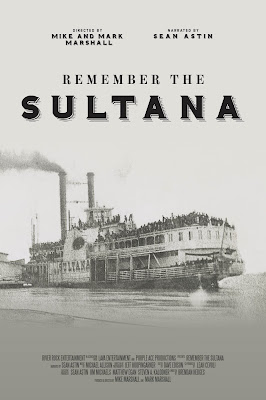
From The Sultana Documentary page on Facebook today comes this intriguing tidbit:

"Pat Jennings, Hartford Steam Boiler's principal boiler engineer, recently released new research finally explaining what caused this historic event over 150 years ago": 

The Sultana – Part 5: What caused the Sultana disaster?

Wednesday, April 13, 2016

Civil War Forum walks Pickett's Charge to cap off 20 years of battlefield tramping


The High Water Mark of the Rebellion
Last week, in Gettysburg, the good folks of the CompuServe Civil War Forum—one of the earliest and most enduring online Civil War Round Tables—held their 20th and last battlefield conference. Forty-some folks gathered from far and wide—from San Francisco (yours truly) and Albuquerque, from Toronto and Memphis, and many points in-between. It was a spectacular weekend in the company of some stellar Licensed Battlefield Guides, and an altogether fitting and proper close to two decades of battlefield tramping.
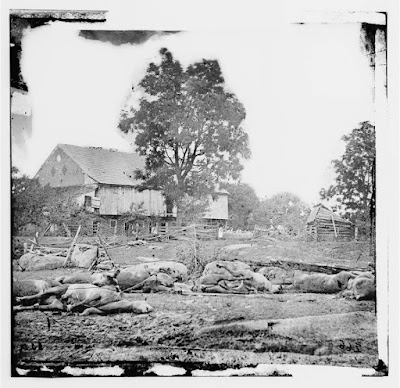
Trostle Barn, April 2016 
Timothy O'Sullivan image of the Trostle barn showing horses from Bigelow's 9th Massachusetts Battery.
Note the hole from a Confederate artillery shell visible in the south face of the barn in both photos. 
Stuart Dempsey kicked things off with a detailed look at 11th Corps actions on the First Day. Chuck Burkell then took the reins for a full day’s touring of the Second Day fighting, and Chris Army spent a morning with us looking over Culp’s and Cemetery Hills, and the East Cavalry Battlefield, including a stop at the old stone barn on the Rummel Farm. Chris also took us by Power’s Hill, where the Civil War Trust is spearheading efforts to preserve an additional 26 acres along the Baltimore Pike.

Chuck Burkell joined us again Saturday afternoon to conduct a walk of Pickett’s Charge. Highlighting our evening events was a moving and memorable talk on “The Meaning of the Gettysburg Address,” by Scott Hartwig at the Dobbin House. Scott was the historian at Gettysburg NMP for 34 years, overseeing a monumental transformation of the park facilities and landscape.
 
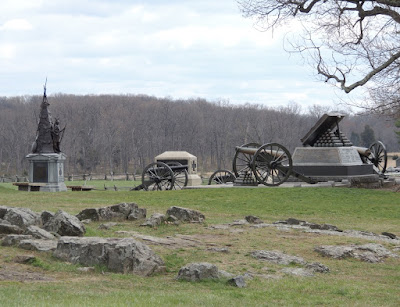
Homing in on the copse of trees, left of center
CompuServe Civil War Forum: Twenty Years of Battlefield Conferences
1997: Antietam and Harpers Ferry with Dennis Frye and Tom Clemens.
1998: Chickamauga and Chattanooga with Jim Ogden; talk by Sam Elliott.
1999: Petersburg with Chris Calkins; talks by Bill Miller, Will Greene, Noah Trudeau; Museum of the Confederacy with John Coski; Hollywood Cemetery
2000: Vicksburg with Ed Bearss; side-trip to Port Hudson; Terry Winschel
2001: Gettysburg, with Jeffry Wert and Wayne Wachsmuth
2002: Shiloh with Stacy Allen; speakers included Wiley Sword and Larry Daniel
2003: Fredericksburg with Bob Krick; side-trip to Chancellorsville; side-trip to Guinea Station with Frank O'Reilly
2004: Wilson's Creek, Pea Ridge, Prairie Grove with Bill Piston and Bill Shea
2005: 1st and 2nd Manassas with Scott Patchan; speakers included Bill Miller and Gary Ecelbarger; side-trip to Loudoun County sites with Steve Meserve
2006: Spring Hill, Franklin and Nashville, with Thomas Cartwright; side-trip to Stones River with Jim Ogden; side-trip to grave site of Sam Watkins with David Fraley
2007: Appomattox with Ed Bearss, Ron Wilson, and Patrick Schroeder; side-trip to Battle of Lynchburg
2008: The Campaign for Atlanta with Greg Biggs, Charlie Crawford, Steven Woodworth, Steve Davis, Russell Bonds, Gordon Jones, and J. D. Fowler
2009: the 1864 Shenandoah Valley Campaign with Scott Patchen and Steve Meserve
2010: Civil War New Orleans, with Prof. Justin Nystrom, and Charlie Nunez
2011: The Seven Days, with Bobby Krick, and Chris Furgeson
2012: The Battle of Bentonville with Mark Bradley; Wilmington and Fort Fisher with Chris Fonvielle
2013: Fort Sumter and Secessionville, Charleston, with Pat Brennan and Richard Hatcher
2014: Ball's Bluff and Monacacy, with James Morgan, and Benjamin F. Cooling
2015: Mobile Bay and Pensacola, with Richard McMurry
2016: The Battle of Gettysburg, with D. Scott Hartwig, Stuart Dempsey, Chris Army, and Chuck Burkell
Saturday, March 26, 2016

Ambrose Bierce on Cheat Mountain


Trail at the site of the Cheat Summit Fort, atop Cheat Mountain in the Monongahela National
Forest of Randolph County, West Virginia. Photo by Carol Highsmith. Library of Congress.
It was in the autumn of that "most immemorial year," the 1861st of our Lord, and of our Heroic Age the first, that a small brigade of raw troops—troops were all raw in those days—had been pushed in across the Ohio border and after various vicissitudes of fortune and mismanagement found itself, greatly to its own surprise, at Cheat Mountain Pass, holding a road that ran from Nowhere to the southeast. Some of us had served through the summer in the "three-months' regiments," which responded to the President's first call for troops. We were regarded by the others with profound respect as "old soldiers." (Our ages, if equalized, would, I fancy, have given about twenty years to each man.) We gave ourselves, this aristocracy of service, no end of military airs; some of us even going to the extreme of keeping our jackets buttoned and our hair combed. We had been in action, too; had shot off a Confederate leg at Philippi, "the first battle of the war," and had lost as many as a dozen men at Laurel Hill and Carrick's Ford, whither the enemy had fled in trying, Heaven knows why, to get away from us. We now "brought to the task" of subduing the Rebellion a patriotism which never for a moment doubted that a rebel was a fiend accursed of God and the angels—one for whose extirpation by force and arms each youth of us considered himself specially "raised up."
from "On a Mountain," by Ambrose Bierce. Read Bierce's Cheat Mountain story in its entirety at the Civil War Trust site. Photo by Carol Highsmith, Library of Congress.

Sunday, March 20, 2016

antidote to idiocy . . . Brooks Simpson and the neo-Confederates

A handy go-to link to send to your friends and associates who are confused by the weed-like tenacity of neo-Confederate propaganda, which has found new life in the internet age.

https://www.splcenter.org/fighting-hate/intelligence-report/2000/arizona-state-professor-brooks-d-simpson-discusses-neo-confederate-movement


[September, 2000]

Saturday, March 12, 2016

Two recent Civil War discoveries at the National Archives

The National Archives in Washington holds unknown and uncountable little treasures, and it's always a thrill to hear of some new tidbit coming to light. Archivists and researchers spend long hours, weeks and years, combing through, organizing, and cataloging items in the nation's miscellanea without catching a glint of a shiny nugget in the pan, or without understanding the significance of particular documents. But sometimes they hit paydirt, and know it at a glance. Interesting discoveries are regularly reported, and two Civil War-related items caught my attention this week. 

A true golden nugget surfaced recently in the form of a letter written by Walt Whitman on behalf of a dying soldier. According to Smithsonian.com (quoting The Washington Post), "Catherine Cusack Wilson was doing volunteer work for a digitization project on Civil War widows’ pension files when she ran across the letter. Ruane writes that she saw the postscript 'Written by Walt Whitman, a friend' on the correspondence, and realized that the letter, dictated by an illiterate soldier at Washington’s Harewood Hospital, was penned by the poet."


Eureka! 

Another neat find was an 1864 letter that makes passing reference to the Free State of Jones, uncovered by historian Adam Domby. That's a particularly timely item given the upcoming May release of a movie on that subject, based on Victoria Bynum's book. Victoria discusses Domby's find on her blog, Renegade South. I conducted an online interview with Victoria about her book way back in 2001, when Matthew McConaughey was still a harmless Wedding Planner. I'm looking forward to the release of the new film. 


Monday, March 07, 2016

Election Results from California

The Abraham Lincoln Papers at the Library of Congress
Series 1. General Correspondence. 1833-1916. Leland Stanford to Abraham Lincoln, Sunday, September 07, 1862 (Telegram reporting results of California elections)

Thursday, March 03, 2016

"Civil War 360" -- now available on Netflix


I missed this when it aired on the Smithsonian Channel back in 2013, but am happy to have a look now at my leisure, thanks to Netflix

According to the New York Times
 The program enlivens a routine narrative of the Civil War by stopping now and then to examine objects that played small but telling roles. A slave’s diary. A photograph of a woman and child found on a dead Union soldier at Gettysburg. The top hat Abraham Lincoln wore to Ford’s Theater. The flag of truce — actually an ordinary dish towel a Confederate captain had recently bought in Richmond — used at Appomattox.
 
Each episode relates a particular perspective on the war, and each has its own celebrity guide. The actress Ashley Judd opens with the Union view, the country singer Trace Adkins brings his impossibly deep voice to the Confederate angle, and the actor Dennis Haysbert is most compelling of all as he explores what the war meant to enslaved people. Each has a connection to the conflict: relatives of Ms. Judd and Mr. Adkins fought for one side or the other, and Mr. Haysbert has slaves among his ancestors.


Tuesday, February 16, 2016

Boy holding Union and Confederate bullets, Perryville Battlefield

from the Library of Congress
  • Title: [Boy holding Union and Confederate bullets, Perryville Battlefield, Perryville, Boyle County, Kentucky]
  • Date Created/Published: c1927.


Sunday, February 14, 2016

Thursday, February 11, 2016

Enhancing Your Family Tree with Civil War Maps

excerpted from Prologue:
Summer 2003, Vol. 35, No. 2
Enhancing Your Family Tree with Civil War Maps
By Trevor K. Plante
In the foreword to Mapping the Civil War: Featuring Rare Maps From the Library of Congress, Richard W. Stephenson aptly notes that "although a great wealth of contemporary manuscript and printed maps is extant in archives and libraries throughout the United States, especially at the National Archives and the Library of Congress in Washington, D.C., few authors, editors, or publishers of today's books and articles on the war avail themselves of this valuable resource." Stevenson's observation can easily be applied to genealogists as well.
In most cases, genealogists conducting research at the National Archives and Records Administration (NARA) tend to concentrate on textual records relating to their Civil War ancestors. Typically, their main focus is on compiled military service records, pension files, and unit records. Often overlooked, cartographic records can be a boon to researchers delving into family history. From plans of a Civil War army post or little-known navy gunboat to maps of famous battles, the maps, plans, and charts found in the Cartographic section of the National Archives in College Park, Maryland, can provide a unique, and oftentimes rewarding, perspective for genealogists.
Maps and plans, while not the starting point for your Civil War genealogy, can enhance previous research. For this reason, it is wise to master textual records relating to your Civil War ancestor prior to conducting research in cartographic records.
The Cartographic section contains approximately eight thousand Civil War maps. While this set of records is impressive, it is just a small fraction of the approximately five million maps, plans, and charts and sixteen million aerial and satellite images maintained in the unit. The Civil War maps collection contains both manuscript and printed maps and plans. The manuscript maps include pencil sketches and original pen-and-ink drawings as well as processed maps that contain annotations in ink or pencil. Many of the Civil War manuscript maps and drawings are unique to the National Archives, while a variety of the printed maps are more common and can be found in other large repositories such as the Library of Congress.
The place to begin is with A Guide to Civil War Maps in the National Archives (1986). This book provides a general description of NARA's Civil War maps and is separated into two parts. Part one is a general guide that describes the maps by record group under these headings: Congress, Department of the Treasury, Department of War, Department of the Navy, Department of the Interior, Department of Commerce, and Other. Confederate Records (RG 109, War Department Collection of Confederate Records) are found under "Other." 
Part two of the guide describes select maps and map series and is arranged by state. Entries in this section usually contain information such as title, author, size, and a detailed description of the map or maps. According to the guide, the maps described in part two "were selected for several reasons: they represent the major geographical areas in the Civil War; they possess intrinsic historic value; they contain the highest concentration of information; they are easier to read than other maps covering the same area; and they are of artistic value" (p. 73). The Cartographic Research Room maintains binders that contain color photographic reproductions of each of the select maps and plans described in part two of the guide.
Read the full article here.

While you're at it, check out this Library of Congress site, which "brings together materials from three premier collections: the Library of Congress Geography and Map Division, the Virginia Historical Society, and the Library of Virginia. Among the reconnaissance, sketch, and theater-of-war maps are the detailed battle maps made by Major Jedediah Hotchkiss for Generals Lee and Jackson, General Sherman's Southern military campaigns, and maps taken from diaries, scrapbooks, and manuscripts all available for the first time in one place. Most of the items presented here are documented in Civil War Maps: An Annotated List of Maps and Atlases in the Library of Congress, compiled by Richard W. Stephenson in 1989. New selections from 2,240 maps and 76 atlases held by the Library will be added monthly." 

Saturday, January 30, 2016

The knoll where Custer fell

  • Creator: Gedney, C. D., artist; Date Created/Published: [between 1881 and 1887
  • Medium: 1 drawing : pencil, ink wash and opaque white. Library of Congress
Valley of the Little Big Horn; Creator(s): Gedney, C. D., artist; Date Created/Published: [between 1880 and 1887]; Medium: 1 drawing on paper with lithotint : pencil and ink.
  • Maj Cutter's ranch at the Custer battlefield; Creator(s): Gedney, C. D., artist; Date Created/Published: [between 1880 and 1887]; Medium: 1 drawing : pencil, charcoal, ink wash and opaque white.

Monday, December 28, 2015

Red Horse: Drawings of the Battle of the Little Bighorn (Stanford's Cantor Arts Center, January 16 to May 9, 2016)

Exhibition Presents Rarely Seen Warrior’s Visual Account of Famous Battle and Cross-Disciplinary Inquiry


Stanford, Calif.—The Cantor Arts Center at Stanford University announces a rare exhibition of 12 drawings by acclaimed ledger artist Red Horse, a Minneconjou Lakota Sioux warrior who fought against George Armstrong Custer and the 7th Cavalry at the Battle of the Little Bighorn in June 1876. Red Horse: Drawings of the Battle of the Little Bighorn brings together key collaborators from Stanford and its communities to explore these indigenous-centered illustrations from diverse perspectives. The Cantor’s exhibition marks the first time that a representative selection of these remarkable works has been displayed together since the 100th anniversary of the Battle of the Little Bighorn in 1976. The drawings are on loan from the National Anthropological Archives, Smithsonian Institution.
“This exhibition, with singular works from the Smithsonian Institution’s acclaimed archives combined with the expertise of Stanford-affiliated scholars, supports new interdisciplinary approaches to art and culture here at Stanford,” said Connie Wolf, the John and Jill Freidenrich Director of the Cantor Arts Center. “This collaborative project illuminates unique and essential new understandings of this critical moment in history.”

For Visitor Information and full press release, click HERE.

Wednesday, December 16, 2015

General, you go down there. . .

When Douglas Scott, and others, conducted excavations at the Little Bighorn battlefield, strangely, they collected artifacts left behind by Hollywood, including cartridge cases and hairpins dating to scenes from the movie Little Big Man, from 1970. 

    (excerpt from on online version of Uncovering History, by Douglas D. Scott)      
Viewers of Little Big Man will recognize some of the unmistakable geography around Weir Point, and Medicine Tail Coulee.


I wrote about my pilgrimage to the Greasy Grass in this 2013 blog post, when I had the pleasure of following Dr. Scott cross country on the battlefield to talk about his work there. 


Monday, December 07, 2015

CUSTER'S TRIALS, A Life on the Frontier of a New America

Biographer T.J. Stiles Takes on the Mythology of General Custer
Forum, with Michael Krasny (KQED, San Francisco)


Thursday, November 26, 2015

Separated at birth?

Publishing titan Ted Savas commented that Captain William Duley, the Mankato executioner, bore a resemblance to Confederate General Nathan "Shanks" Evans. I think he might be on to something.


Friday, November 20, 2015

"Horse thief statue" for sale, best offer


From the Lebanon Enterprise
Lebanon, Kentucky

City puts Morgan statue up for bid
Confederate Gen. John Hunt Morgan statue has been collecting dust in storage since it was created

By Stevie Lowery
Wednesday, November 18, 2015 at 6:00 am (Updated: November 18, 6:01 am)

A piece of artwork that’s never been displayed and has been the center of controversy since it was created in 1999 is for sale.

The City of Lebanon is accepting sealed bids for the Confederate Gen. John Hunt Morgan statue. During the Lebanon City Council meeting Monday, Nov. 9, Public Works Director Terry Bland asked the council to consider doing something with the statue, which is being stored and taking up space at the city service center.

The council approved taking sealed bid for the sale of the statue. “The council decided to sell the horse statue since they felt we were not going to put it up because everyone will call it the Morgan statue regardless if we rename it,” Lebanon City Administrator John Thomas wrote in an email to the Enterprise. “It is also in need of some repairs due to its riding around on the small trailer, several cracks have developed. So we’re seeking bids.”

read the full article (and for info on placing your sealed bid) here

Tuesday, November 03, 2015

Image found of man who hanged 38 Dakota men 153 years ago

A formal glass-plate portrait of William Duley in his military jacket,
probably taken between September 1862 and February 1865.
From the Minneapolis Star Tribune
by Curt Brown

Until now, historians had never seen an image of Capt. William J. Duley—the executioner on the day 38 Dakota men were hanged in Mankato after the 1862 U.S.-Dakota War. New Ulm researcher and author Elroy Ubl tracked down a descendant in Seattle who had inherited a family album of the glass-plate portraits, including her great-great grandfather’s.

Now we know what the hangman looked like at the largest mass execution in U.S. history. Just how history remembers Duley — as traumatized father, notorious executioner or out-for-himself promoter — remains a thornier question.

Three of Duley’s children—Willie (10), Belle (4) and Francis (6 months)—were killed in the conflict. His wife, Laura, was shot in the heel, witnessed at least one child’s slaying and was taken captive along with their son, Jefferson, and daughter. Emma. Some accounts said Laura was pregnant at the time and miscarried during her four months on the Dakota plains. She might have been raped.

Read the full article here.

Tuesday, October 06, 2015

The Counterfeiter Who Sank the Confederacy

IMAGE: 
WORTHPOINT / CHLOE EFFRON
"Upham had an idea. If it worked, he would not only undermine and upend the Confederate economy but make himself a good bit of money in the process. He offered to buy the plate from the reporter, then used it to run off 3000 copies of the bank note, printed on premium French paper." 
Read the full story here at Mentalfloss.com