
Thursday, March 14, 2013
Luray Caverns
Amazingly, the third-most visited cave in the United States, after Mammoth, and Carlsbad. An interesting Washington Post Magazine article can be read here.


Tuesday, January 22, 2013
7 Questions: Vicksburg Historian Terry Winschel
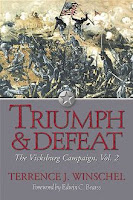
Terry Winschel, long-time historian at Vicksburg National Military Park, recently retired from the National Park Service. His illustrious career included serving as a Licensed Battlefield Guide at Gettysburg. He is the author of innumerable articles, and a long list of books on the Civil War, including The Civil War Diary of the Common Soldier, Triumph and Defeat: the Vicksburg Campaign (2 vols), and Vicksburg: Fall of the Confederate Gibraltar. His article, "Vicksburg Campaign: Unvexing the Father of Waters," can be read at The Civil War Trust website.
DW: Congratulations on your retirement. How
many years did you serve at Vicksburg National Military Park, and how many
different roles did you have there?
 TW: I began my association with the National
Park Service in the summer of 1976 when I served as a Licensed Battlefield
Guide at Gettysburg National Military Park. The following summer I landed a
seasonal park ranger job at Gettysburg and have from that date been
continuously employed by the NPS until my retirement in August 2012. From
Gettysburg I went on to serve seasonal appointments at Vicksburg,
Fredericksburg, and Valley Forge, after which I became a full-time
employee of the NPS at Vicksburg and spent my entire permanent career in
Mississippi.
TW: I began my association with the National
Park Service in the summer of 1976 when I served as a Licensed Battlefield
Guide at Gettysburg National Military Park. The following summer I landed a
seasonal park ranger job at Gettysburg and have from that date been
continuously employed by the NPS until my retirement in August 2012. From
Gettysburg I went on to serve seasonal appointments at Vicksburg,
Fredericksburg, and Valley Forge, after which I became a full-time
employee of the NPS at Vicksburg and spent my entire permanent career in
Mississippi.
The duties of that position were diverse and included managing the park's extensive archival, photographic, and map collections, the park library, and assisting researchers. They also entailed conducting Staff Rides for the military, tours of the campaign area for CWRTs, speaking at CWRTs and at academic symposia, helping to guide the park's interpretive operations, and drafting publications such as brochures and site bulletins.
 DW: I have often thought about what it would be
like to be so intimately connected to a battlefield, for such a long period of
time. You've been eating, sleeping, and breathing Vicksburg for so long, is it
even really possible to "retire"?
DW: I have often thought about what it would be
like to be so intimately connected to a battlefield, for such a long period of
time. You've been eating, sleeping, and breathing Vicksburg for so long, is it
even really possible to "retire"?
 TW: Among the accomplishments I'm proudest of
are the permanent additions to the park. Over the years I drafted several
pieces of legislation relative to Vicksburg that were passed by Congress
authorizing boundary adjustments. As a result, the remaining vestige of Grant's
Canal and Pemberton's Headquarters are now part of the park, and approximately
3,000 acres of land are preserved on sites associated with the Vicksburg
campaign, but not under the jurisdiction of the NPS.
TW: Among the accomplishments I'm proudest of
are the permanent additions to the park. Over the years I drafted several
pieces of legislation relative to Vicksburg that were passed by Congress
authorizing boundary adjustments. As a result, the remaining vestige of Grant's
Canal and Pemberton's Headquarters are now part of the park, and approximately
3,000 acres of land are preserved on sites associated with the Vicksburg
campaign, but not under the jurisdiction of the NPS.
DW: Is there an important story about Vicksburg
that still needs to be told?

 TW: I began my association with the National
Park Service in the summer of 1976 when I served as a Licensed Battlefield
Guide at Gettysburg National Military Park. The following summer I landed a
seasonal park ranger job at Gettysburg and have from that date been
continuously employed by the NPS until my retirement in August 2012. From
Gettysburg I went on to serve seasonal appointments at Vicksburg,
Fredericksburg, and Valley Forge, after which I became a full-time
employee of the NPS at Vicksburg and spent my entire permanent career in
Mississippi.
TW: I began my association with the National
Park Service in the summer of 1976 when I served as a Licensed Battlefield
Guide at Gettysburg National Military Park. The following summer I landed a
seasonal park ranger job at Gettysburg and have from that date been
continuously employed by the NPS until my retirement in August 2012. From
Gettysburg I went on to serve seasonal appointments at Vicksburg,
Fredericksburg, and Valley Forge, after which I became a full-time
employee of the NPS at Vicksburg and spent my entire permanent career in
Mississippi.
Initially I served as an interpreter at
Vicksburg manning the park's information desk and sales area,
doing interpretive programs, and served as a member of the park's summer
living history cannon crew. In 1988, however, the position of Historian was
re-established and I was fortunate enough to be selected. It was the position
in which I served for the duration of my career.
The duties of that position were diverse and included managing the park's extensive archival, photographic, and map collections, the park library, and assisting researchers. They also entailed conducting Staff Rides for the military, tours of the campaign area for CWRTs, speaking at CWRTs and at academic symposia, helping to guide the park's interpretive operations, and drafting publications such as brochures and site bulletins.
In addition to the "official" duties
and responsibilities I was allowed to take charge of the park's land
acquisition program, serve as sexton of Vicksburg National Cemetery, was the
park's public relations officer, and coordinator of the park's sales area.
I also worked closely with the chief of maintenance on an array of projects
from battlefield and monument restoration, to roads and bridges maintenance, to
preservation of historic structures. Thus, as park historian, I wore many
hats—as many as I wanted juggle.
 DW: I have often thought about what it would be
like to be so intimately connected to a battlefield, for such a long period of
time. You've been eating, sleeping, and breathing Vicksburg for so long, is it
even really possible to "retire"?
DW: I have often thought about what it would be
like to be so intimately connected to a battlefield, for such a long period of
time. You've been eating, sleeping, and breathing Vicksburg for so long, is it
even really possible to "retire"?
TW: No it is not. Since my retirement I have
been and will continue to conduct tours of Vicksburg and other battlefields
across the nation, write a weekly column for the local newspaper on the
Vicksburg campaign, and have a full writing plate for articles on the Vicksburg
campaign for numerous periodicals. I also remain very active on the speaking
circuit and this year will appear before a dozen CWRTs across the nation
and speak at several academic seminars. I am also working with an
array of partners at the federal, state, and local levels on battlefield
preservation initiatives throughout the Vicksburg campaign area as well
as at battlefields in a half-dozen other states. An exciting project
that is currently underway is working with the Civil War Trust to develop a
phone app on the Vicksburg campaign that will feature scores of "Virtual
Signs," numerous videos, and animated maps of the campaign.
DW: What are some of the things you are most
satisfied about accomplishing during your tenure at the Park? Were you able to
increase the Park's holdings, influence the way the grounds were interpreted,
restore historic areas?
 TW: Among the accomplishments I'm proudest of
are the permanent additions to the park. Over the years I drafted several
pieces of legislation relative to Vicksburg that were passed by Congress
authorizing boundary adjustments. As a result, the remaining vestige of Grant's
Canal and Pemberton's Headquarters are now part of the park, and approximately
3,000 acres of land are preserved on sites associated with the Vicksburg
campaign, but not under the jurisdiction of the NPS.
TW: Among the accomplishments I'm proudest of
are the permanent additions to the park. Over the years I drafted several
pieces of legislation relative to Vicksburg that were passed by Congress
authorizing boundary adjustments. As a result, the remaining vestige of Grant's
Canal and Pemberton's Headquarters are now part of the park, and approximately
3,000 acres of land are preserved on sites associated with the Vicksburg
campaign, but not under the jurisdiction of the NPS.
Seven new state monuments were added to
the park during my tenure as historian—the process for which took years. In
addition, many of the park's other state monuments were restored during those
years, the combined costs of which was millions of dollars. I helped lay the
ground work for the current battlefield restoration initiatives, assisted
in the development of the park's current audio visual offerings, greatly
expanded the park's archival, curatorial, and library holdings.
In my final years with the agency, I worked diligently to preserve and
enhance the hallowed grounds of Vicksburg National Cemetery. But my
proudest accomplishment was keeping faith with the veterans themselves, the men
who not only fought and died at Vicksburg, but those who labored to establish
the park and make it an American shrine. And the greatest joy came from serving
the visitors and making countless friends across the nation who share a similar
passion for history.
 |
| General Grant stature, Grant's headquarters |
TW: Yes, there is still so much that needs to
be told. The story of Vicksburg's civilian population, both black and
white, needs more light shined upon it, especially as it deals with Union
occupation during the Civil War through Reconstruction. Confederate relief
operations under Joseph E. Johnston and the efforts of the Trans-Mississippi
Confederates to come to Vicksburg’s assistance is worthy of more than a
chapter in most books on the campaign. Intelligence and
counterintelligence operations during the campaign played more of a role than
people know of and should be addressed by a worthy pen. The Battle of
Milliken's Bend needs a full-length treatment, as too does the history of
commemoration and the establishment of Vicksburg National Military Park. An
atlas of day-to-day operations during the campaign is among the biggest voids
in available literature on Vicksburg. And, of course, the naval story and its
leading figures must be addressed more than in passing.
DW: Have you read the manuscript for Michael
Ballard's forthcoming book, Grant at
Vicksburg? And if so, what can we expect from one of the few Vicksburg
sesquicentennial books on the docket?
TW: Yes. It is excellent! Not wishing to let
the cat out of the bag, suffice it to say that readers will be well-pleased,
especially those who think there is nothing new on Vicksburg about which to
write. Mike has certainly established himself as Mississippi’s foremost
authority on the Civil War in the West.
DW: Will you continue to research and write
about Vicksburg? Anything in the works at present?
TW: Definitely. In addition to the app for
the Civil War Trust, I am currently working on two magazine articles. As
soon as the sesquicentennial observance is over here at Vicksburg and things
slow down a little in terms of programs and tours, I plan to get back to work
on the books I want to write. There are three in particular that I want to
write and truly pray that I will complete them someday and leave them as
part of the lasting legacy that honors those who wore the blue and gray. Researching
and writing is a joy. . . .At present.
DW: What's in store for the sesquicentennial
next summer? Should we all plan a visit?
TW: The staff at Vicksburg NMP has put together
a series of events which include:
- Heritage Show on April 5-7 that will feature musicians, dancers, and Civil War-era craft shows
- U.S. Postal Service release of Civil War commemorative Stamps on May 23
- "Shadows of the Past" candlelight tour of the park on May 23
- U.S. Navy Band concert on May 24
- Mississippi Symphony Orchestra performance on May 25
- Jackson Mass Community Choir on May 26
- Wreath Laying Ceremony in the national cemetery on May 27
- On July 4, there will be a grand illumination of the park at the different state monuments. For more information please call the park at 601-636-0583

Monday, January 21, 2013
Charleston in April: 2013 Civil War Forum Battlefield Conference
 |
| Painting of the H.L. Hunley by Conrad Wise Chapman, dated circa. 1863-64. |
April 11-14: Civil War Charleston
$295 registration includes a seat on the bus, entrance fees to all locations (including museums and ferry ride to Fort Sumter), buffet dinner Friday and Saturday evenings, and box lunches for our Friday and Saturday outings [does not include lodging]. All monies over expenses to be donated to the Civil War Trust.
See a tentative itinerary and registration information here.
For more information, contact David Woodbury at civilwarforum[at]mac[dot]com.
Saturday, January 19, 2013
3-D sonar provides new view of Civil War shipwreck

This 2012 high-resolution 3-D sonar image provided by the National Oceanic and Atmospheric Administration shows the remains of the USS Hatteras, the only U.S. Navy ship sunk in combat in the Gulf of Mexico during the Civil War. The view is from the vessel’s port side, toward its stern. The long paddlewheel shaft, bent and angled, rests on the seabed with the fragmented remains of the port side paddlewheel on the right. (AP Photo/NOAA, Northwest Hydro Inc., James Glaeser) (Credit: AP)
Full story here.
Tuesday, January 08, 2013
The Hunt for Abraham Lincoln’s Congressional Pay Records
 |
Lincoln pay and mileage account for the First Session of the 30th Congress, National Archives
|
Ironically, it was Lincoln’s great rival, Stephen A. Douglas, who helped set off an intense search for pay records of the 30th Congress. While hunting through an odd cache of files in the Auditors of the Treasury Records in pursuit of a Lincoln document involving “Coffee Mill Guns,” I stumbled across a handful of Douglas’s Senate pay vouchers from 1848. This small discovery reignited my hope that other Treasury records might yield up the elusive congressional pay files; thus began a test of archival digging that all dedicated historical researchers know well.Read the whole post here.
Tuesday, December 25, 2012
Reprising a favorite blog post (from 2006)
Lately I have been mining the transcripts of various author Q and A sessions held in the Civil War Forum over the past ten years, featuring 40-some guests, as I collect the material together into some web-friendly format. Here are a few juicy tidbits I came across this weekend.
One thing that I asked of nearly everyone, often the first question, was whether there was anything in their studies that surprised them, or caused them to rethink their understanding of a person, a battle, or event. I love the idea of a scholar or researcher making discoveries, or experiencing revelations, or epiphanies. Here are a few examples of answers to that question by Jeffry Wert, William Marvel, Scott Harwig, and John Simon. And for the fun of it, I've tagged a couple more quotes onto the end, by Terry Winschel and Richard McMurry, just to tweak the sensibilities of those students hopelessly stuck in the Eastern Theater.
Jeffry Wert, author, among other things, of books on Custer, and Longstreet, spoke with us on January 30. 1997.
Q. We'll start off with a question about Custer. Did you have any preconceived notions about George A. Custer that your research on the man caused you to rethink?
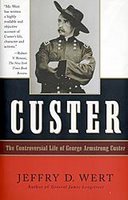
A. (Jeffry Wert): I probably had most of the preconceived ideas that most people had about Custer, and dealt with him in my first book, but now three things strike me—really changed with my research on Custer: 1) was his zest for life; 2) was the regard that his men held for him during the Civil War. I was surprised by the depth and the breath of it; and 3) was Little Big Horn, but that resulted from my lack of knowledge prior to it. My ideas on how it unfolded, and why he did certain things, changed considerably. We don't know all the answers, but his actions make sense -- not all of them, but numbers of them do.
Q. I would like to ask a similar question about James Longstreet, Lee's "Old Warhorse." How did your understanding of the man evolve during the course of your research?
A. (Jeffry Wert): I wish there had been more personal material, first of all, but they seem to have been destroyed in the fire that consumed his house after the war. But with that said, I found him to be a better general than I thought he would be. I think he was very much of a realist about war, far more than other Southern generals. Despite his post-war politics, most of the men who served under him never lost their respect or admiration for the man. And, finally, I was surprised at the dissension among the Army of Northern Virginia officer ranks, particularly among 1st Corps officers, in their perception of alleged favoritism towards Virginians.
William Marvel, author of Andersonville, The Last Depot, and many other titles.
Q. During the course of your research on Andersonville, were there any discoveries or realizations that substantially changed your understanding of Civil War-era prisons, and prisoners?
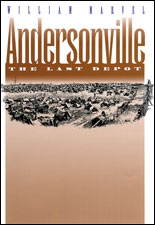
A. (William Marvel): Yes. Specifically, the degree to which the suffering on the Southern side was much less as a result of deliberate maltreatment than was originally thought. And also how much worse the treatment of Confederate prisoners by Union soldiers was, than was originally believed—not that the Union guards were particularly malicious, but they were much more stern and tended to shoot much more frequently for minor infractions than I was led to believe by the rather cursory secondary works on the subject.
And at Andersonville in particular I was impressed by the efforts that were made to meet the needs of the prisoners. It was generally believed that the Confederates tended to force the Union prisoners into such actions as crossing the dead line so they could be shot—for sport, virtually—and that the prisoners were starved deliberately. In fact, only on a few occasions was food deliberately withheld from them, and most of their suffering resulted from the general poverty of the Confederate government. The only administration policy to withhold food from prisoners was actually exercised by Union prison authorities, in retaliation for the perceived deliberate starvation of their own prisoners in Confederate hands.
D. Scott Hartwig, then chief historian at Gettysburg National Military Park, joined us on Thursday, July 18, 1996:
Q. In your capacity as historian at the Gettysburg battlefield, I imagine you've had the opportunity to tramp all over that hallowed ground. Can you think of any discoveries you've made, or revelations you've had, which resulted from a more intimate knowledge of the topography of the battlefield?
A. (Scott Hartwig): Sure, lots of them—this would be the case with any battlefield that you're able to spend a lot of time on. When you can walk a field from many different angles and approaches, you learn the subtleties of the ground. When you start to understand those, the battle begins to become understandable, and you can fill in details that the soldiers who were there may not have mentioned. Last year I did a program on the attack of Laws' brigade on Little Round Top, and the Confederates all mentioned that Union sharpshooters were posted behind a stone wall, near the Slyder Farm, and I couldn't find the stone wall. There wasn't one, and I looked and looked and looked, and I kept walking down the line where the wall would have been, and there it was. I found the remnants of it. So there was confirmation, to me, that there had been a wall there, and that the wall had been removed after the war—for unknown reasons. That's just one example.
John Y. Simon, speaking on September 29, 2000, is the editor of the The Papers of U.S. Grant.
Q. Dr. Simon, welcome. You've been editing "The Papers" since 1962. Are you getting tired of Grant yet, or still finding new information, or new sides to the man?
A. (John Simon) I've never thought that I understood the man fully, and for that reason I've never become tired of him. People don't ask you questions like that about your wife, and I've been married to her for a long time. Grant's a very real person, and one with many dimensions to him. There's still more to learn and I'm eager to do it. We're into the presidential years now, but I'm still fascinated by the Civil War period. And there are documents that we haven't found yet, but those that are coming to light, almost daily, cast new perspectives on Grant.
Q. What do you think, based on your readings of his correspondence, may be the biggest misconceptions about Grant? Was there anything that you were surprised to learn, or which slowly changed your perception of him?
A. (John Simon) Well I've been increasingly impressed by what a good writer he is. He has the capacity to express what he's thinking in the clearest possible form. He's a maker of memorable phrases. One of our interesting discoveries many years ago was when he wrote the famous line about fighting it out on this line if it takes all summer, he originally wrote, "If it takes me all summer." Then he went back and crossed out the word "me." He's conscious of just who's doing that fighting, and knows that that word "me" is inappropriate. Normally, the words just flow out as they did in the celebrated letter that he wrote at Appomattox, but when necessary he revised what he was writing.
Bonus Stonewall had nothing on Grant question:
Terry Winschel, chief historian at Vicksburg National Military Park, joined us on December 5, 1996.
Q. How do you think Grant's movements from the time that he crossed the Mississippi till he invested Vicksburg compare with Stonewall Jackson's Valley campaign?
A. (Terry Winschel): Grant's movements after he crossed the Mississippi River were bold, decisive, and kept his opponent unbalanced, and in that regard compare quite favorable with Stonewall Jackson's movements in the Valley. They demonstrate that Grant was master of the situation, and was a bold and aggressive officer. In a 17-day period, Grant's army would push deep into Mississippi, encounter and defeat Confederate forces in five engagements, and drive Pemberton's army back into the city's fortifications.It is a brilliant campaign that is studied by professional soldiers to this date, and Grant's campaign for Vicksburg is highlighted in the chapter on offensive operations in the army's current field manual FM100-5.
Bonus Gettysburg is fascinating-but-irrelevant question:
Richard McMurry, author of Two Great Rebel Armies: An Essay in Confederate Military History, speaking with us on Thursday, August 1, 1996
Q. Thank you for being with us tonight. In your book Two Great Rebel Armies, and elsewhere, you have made the point—convincingly, I think—that the war was won and lost in the West. I wonder if you would start us off this evening with a summary of that argument, for the benefit of any Virginia-centric members who may be in attendance.
A. (Richard McMurry): I think the best way to answer that is just to ask people to look at a map, and to ask where the armies were in 1861, 1862 1863, 1864, 1865. If you do that you will see that the armies that started out in 1861 in Missouri and Kentucky were in Tennessee, Mississippi in 1862 and 1863. They were in Georgia in 1864. They were in the Carolinas in 1865. And where were the armies that started out in Virginia in 1861? Or to put it another way, the Federal armies captured, if memory serves me correctly, 9 of the 11 Confederate state capitals. The western armies captured 8 of them, including Columbia, South Carolina and Raleigh, North Carolina, which means that at the end of the war, the western Union armies were about 160 to 170 miles from Richmond. What it amounts to is that Western battles and campaigns produced results. Eastern battles and campaigns produced stalemates. And I would just summarize it all by saying that no battle fought east of the Appalachian Mountains had any military impact on the outcome of the war.
One thing that I asked of nearly everyone, often the first question, was whether there was anything in their studies that surprised them, or caused them to rethink their understanding of a person, a battle, or event. I love the idea of a scholar or researcher making discoveries, or experiencing revelations, or epiphanies. Here are a few examples of answers to that question by Jeffry Wert, William Marvel, Scott Harwig, and John Simon. And for the fun of it, I've tagged a couple more quotes onto the end, by Terry Winschel and Richard McMurry, just to tweak the sensibilities of those students hopelessly stuck in the Eastern Theater.
Jeffry Wert, author, among other things, of books on Custer, and Longstreet, spoke with us on January 30. 1997.
Q. We'll start off with a question about Custer. Did you have any preconceived notions about George A. Custer that your research on the man caused you to rethink?

A. (Jeffry Wert): I probably had most of the preconceived ideas that most people had about Custer, and dealt with him in my first book, but now three things strike me—really changed with my research on Custer: 1) was his zest for life; 2) was the regard that his men held for him during the Civil War. I was surprised by the depth and the breath of it; and 3) was Little Big Horn, but that resulted from my lack of knowledge prior to it. My ideas on how it unfolded, and why he did certain things, changed considerably. We don't know all the answers, but his actions make sense -- not all of them, but numbers of them do.
Q. I would like to ask a similar question about James Longstreet, Lee's "Old Warhorse." How did your understanding of the man evolve during the course of your research?

A. (Jeffry Wert): I wish there had been more personal material, first of all, but they seem to have been destroyed in the fire that consumed his house after the war. But with that said, I found him to be a better general than I thought he would be. I think he was very much of a realist about war, far more than other Southern generals. Despite his post-war politics, most of the men who served under him never lost their respect or admiration for the man. And, finally, I was surprised at the dissension among the Army of Northern Virginia officer ranks, particularly among 1st Corps officers, in their perception of alleged favoritism towards Virginians.
William Marvel, author of Andersonville, The Last Depot, and many other titles.
Q. During the course of your research on Andersonville, were there any discoveries or realizations that substantially changed your understanding of Civil War-era prisons, and prisoners?
A. (William Marvel): Yes. Specifically, the degree to which the suffering on the Southern side was much less as a result of deliberate maltreatment than was originally thought. And also how much worse the treatment of Confederate prisoners by Union soldiers was, than was originally believed—not that the Union guards were particularly malicious, but they were much more stern and tended to shoot much more frequently for minor infractions than I was led to believe by the rather cursory secondary works on the subject.
And at Andersonville in particular I was impressed by the efforts that were made to meet the needs of the prisoners. It was generally believed that the Confederates tended to force the Union prisoners into such actions as crossing the dead line so they could be shot—for sport, virtually—and that the prisoners were starved deliberately. In fact, only on a few occasions was food deliberately withheld from them, and most of their suffering resulted from the general poverty of the Confederate government. The only administration policy to withhold food from prisoners was actually exercised by Union prison authorities, in retaliation for the perceived deliberate starvation of their own prisoners in Confederate hands.
D. Scott Hartwig, then chief historian at Gettysburg National Military Park, joined us on Thursday, July 18, 1996:
Q. In your capacity as historian at the Gettysburg battlefield, I imagine you've had the opportunity to tramp all over that hallowed ground. Can you think of any discoveries you've made, or revelations you've had, which resulted from a more intimate knowledge of the topography of the battlefield?
A. (Scott Hartwig): Sure, lots of them—this would be the case with any battlefield that you're able to spend a lot of time on. When you can walk a field from many different angles and approaches, you learn the subtleties of the ground. When you start to understand those, the battle begins to become understandable, and you can fill in details that the soldiers who were there may not have mentioned. Last year I did a program on the attack of Laws' brigade on Little Round Top, and the Confederates all mentioned that Union sharpshooters were posted behind a stone wall, near the Slyder Farm, and I couldn't find the stone wall. There wasn't one, and I looked and looked and looked, and I kept walking down the line where the wall would have been, and there it was. I found the remnants of it. So there was confirmation, to me, that there had been a wall there, and that the wall had been removed after the war—for unknown reasons. That's just one example.
John Y. Simon, speaking on September 29, 2000, is the editor of the The Papers of U.S. Grant.
Q. Dr. Simon, welcome. You've been editing "The Papers" since 1962. Are you getting tired of Grant yet, or still finding new information, or new sides to the man?
A. (John Simon) I've never thought that I understood the man fully, and for that reason I've never become tired of him. People don't ask you questions like that about your wife, and I've been married to her for a long time. Grant's a very real person, and one with many dimensions to him. There's still more to learn and I'm eager to do it. We're into the presidential years now, but I'm still fascinated by the Civil War period. And there are documents that we haven't found yet, but those that are coming to light, almost daily, cast new perspectives on Grant.
Q. What do you think, based on your readings of his correspondence, may be the biggest misconceptions about Grant? Was there anything that you were surprised to learn, or which slowly changed your perception of him?
A. (John Simon) Well I've been increasingly impressed by what a good writer he is. He has the capacity to express what he's thinking in the clearest possible form. He's a maker of memorable phrases. One of our interesting discoveries many years ago was when he wrote the famous line about fighting it out on this line if it takes all summer, he originally wrote, "If it takes me all summer." Then he went back and crossed out the word "me." He's conscious of just who's doing that fighting, and knows that that word "me" is inappropriate. Normally, the words just flow out as they did in the celebrated letter that he wrote at Appomattox, but when necessary he revised what he was writing.
Bonus Stonewall had nothing on Grant question:
Terry Winschel, chief historian at Vicksburg National Military Park, joined us on December 5, 1996.
Q. How do you think Grant's movements from the time that he crossed the Mississippi till he invested Vicksburg compare with Stonewall Jackson's Valley campaign?
A. (Terry Winschel): Grant's movements after he crossed the Mississippi River were bold, decisive, and kept his opponent unbalanced, and in that regard compare quite favorable with Stonewall Jackson's movements in the Valley. They demonstrate that Grant was master of the situation, and was a bold and aggressive officer. In a 17-day period, Grant's army would push deep into Mississippi, encounter and defeat Confederate forces in five engagements, and drive Pemberton's army back into the city's fortifications.It is a brilliant campaign that is studied by professional soldiers to this date, and Grant's campaign for Vicksburg is highlighted in the chapter on offensive operations in the army's current field manual FM100-5.
Bonus Gettysburg is fascinating-but-irrelevant question:
Richard McMurry, author of Two Great Rebel Armies: An Essay in Confederate Military History, speaking with us on Thursday, August 1, 1996
Q. Thank you for being with us tonight. In your book Two Great Rebel Armies, and elsewhere, you have made the point—convincingly, I think—that the war was won and lost in the West. I wonder if you would start us off this evening with a summary of that argument, for the benefit of any Virginia-centric members who may be in attendance.
A. (Richard McMurry): I think the best way to answer that is just to ask people to look at a map, and to ask where the armies were in 1861, 1862 1863, 1864, 1865. If you do that you will see that the armies that started out in 1861 in Missouri and Kentucky were in Tennessee, Mississippi in 1862 and 1863. They were in Georgia in 1864. They were in the Carolinas in 1865. And where were the armies that started out in Virginia in 1861? Or to put it another way, the Federal armies captured, if memory serves me correctly, 9 of the 11 Confederate state capitals. The western armies captured 8 of them, including Columbia, South Carolina and Raleigh, North Carolina, which means that at the end of the war, the western Union armies were about 160 to 170 miles from Richmond. What it amounts to is that Western battles and campaigns produced results. Eastern battles and campaigns produced stalemates. And I would just summarize it all by saying that no battle fought east of the Appalachian Mountains had any military impact on the outcome of the war.
Civil War Christmas gifts

General Sherman to President Lincoln
(Telegram offering Savannah, Georgia as a Christmas present)
—transcription of above—
December 22, 1864 Dec 25— Dec. 25, 1864.
Savannah Ga Dec 22. 1864
Via Ft. Monroe Va Dec 25.
I beg to present you as a Christmas gift the City of Savannah with 150 heavy guns & plenty of ammunition & also about 25.000 bales of cotton.
W. T. Sherman
Major Genl
Friday, December 07, 2012
Charity Snider's mole skin
 |
| Letter from Charity Snider, with accompanying mole skin, from her Civil War Widow's Pension Application File. Discoloration on the paper is from the mole skin. (WC843258, Record Group 15), National Archives. |
In order to receive a pension, Civil War widows had to prove that they had actually been married to a soldier. Marriage records were far less consistent in the past than they are today, which explains why Charity Snider ended up sending the pressed skin of a dead mole to the federal government. Read the full Slate article here.
Tuesday, December 04, 2012
The President is taller than General Grant, and still growing. . .

This just in. . . the General Grant tree in Sequoia National
Park, once considered the 2nd largest tree in the world (after the nearby
General Sherman tree), has been relegated to the 3rd spot on the
list. A still-growing youngster -- the 3,240-year-old giant sequoia known as
The President – has moved up to the number 2 slot.
Saturday, December 01, 2012
Carto-geeks are cool

by Tony Horwitz
Smithsonian Ingenuity Award Winner, Anne Kelly Knowles
"A red dot denotes General Lee’s vantage point from the top of the Lutheran Seminary. His field of vision shows as clear ground, with blind spots shaded in deep indigo. Knowles has even factored in the extra inches of sightline afforded by Lee’s boots. “We can’t account for the haze and smoke of battle in GIS, though in theory you could with gaming software,” she says."
Saturday, November 17, 2012

Monday, November 12, 2012
Construction Site Offers Fleeting Glimpse of the Civil War Past [Fredericksburg]
 |
Brendan Hoffman for The New York Times
Archaeologists in Fredericksburg, Va., last week. On the site of a $35 million courthouse complex, they have excavated artifacts buried since an 1862 battle.
|
By THEO EMERY
Published: November 11, 2012FREDERICKSBURG, Va. — The first bullet surfaced just after lunch. As Jon Tucker sifted soil through a screen in September, a corroded lead slug jiggled into view amid the sand and ash excavated from a pit just a few feet from a fenced-off sidewalk and rushing traffic.
-- read the full article here.Better off without 'em

These are certainly interesting times for
political discourse in this country. Who could have foreseen that “legitimate
rape” would become a presidential campaign issue, or the sesquicentennial
sentiments of an Arkansas politician commenting, in 2012, about how lucky the descendants of slaves are to have had their ancestors brought to America in chains (the old blessing-in-disguise argument). And now, some of our disgruntled
fellow citizens have raised the specter of secession again, because they reject the results of a democratic election. That sounds familiar.
The release of Better Off Without 'Em, A Northern Manifesto for Southern Secession, by
Chuck Thompson (Simon & Schuster: New York), couldn't be more
timely. I've downloaded it to my Kindle today and will likely comment on portions of it as my reading progresses.
There are many
reviews of Thompson’s book out there, but this is a good one to start with (originally published on Daily Kos, Sunday, October 14, 2012).
Saturday, November 10, 2012
Daniel Day-Lewis Does Lincoln

"Lincoln feels like a movie Steven Spielberg has always been fated to make. Of course these two figures were bound to collide at some point: the most mythic of American presidents and the most myth-making of American filmmakers. The values Abraham Lincoln has come to represent in the collective imagination—freedom, equality, justice, mercy—are the same values Spielberg has spent a career celebrating and not infrequently sentimentalizing."
Slate review.
Daniel Day-Lewis in Lincoln -- Photo by David James – © 2012 - DreamWorks II Distribution Co.
Monday, November 05, 2012

Wednesday, October 24, 2012
The Great Hanging at Gainesville
 |
| Hanging of Union Men in Texas. Frank Leslie's Ilustrated Newspaper. Prints and Photographs Collection 1993/202-5-4. |
Another fascinating post from the New York Times's Disunion blog (October 16, 2012). . .
On Oct. 12, a cold Sunday morning in Gainesville, the mob had enough of the deliberations inside and stormed the courtroom, demanding a list of the men on trial; the jury complied and handed over the names of 14 of them, chosen at random; all were hanged the next day, under the supervision of Young (coincidentally, three days later he was killed by bandits preying along the Red River).
Friday, October 12, 2012
The Civil War at the Huntington (through January 7)

The Huntington commemorates the 150th anniversary of the Civil War with a new exhibition centered solely on its Civil War imagery, complemented by a companion exhibition of manuscript material providing narrative context. Events, lectures, a special exhibition site, articles, audio, videos, and a Living History Day all contribute to The Civil War at The Huntington, a deeper look at the complicated war that took the lives of three quarters of a million people.
Tuesday, October 02, 2012
Modoc War correction: not 3 generals' sons. Make that 2 generals' sons and a nephew

About two years ago, I posed a question about something that three Civil War generals had in common. Later, I answered that question with a post about the fourth battle of the 1873 Modoc War, a field preserved today at Lava Beds National Monument as the Thomas-Wright battlefield. In that legendary blog post, I asserted that the sons of three Civil War generals were killed on that battlefield. But Eric Johnson, author of the brand new book pictured at top, informed me that one of those three -- Albion Howe -- was, in fact, a nephew of the Civil War general Albion Parris Howe. I think he's right, and am happy to post a correction.
First installment of Hartwig's Antietam study released

I first heard that D. Scott Hartwig was working on a monumental campaign study of Antietam so many years ago, I had actually forgotten about the project, or assumed it had been abandoned. Not so! Volume one is now available from Johns Hopkins University Press, and sets the stage with an examination of McClellan's return to the Army of the Potomac, the capture of Harpers Ferry, and the all-day fight for control of the South Mountain passes. Can't wait to read this one.
Monday, September 17, 2012
"Death and the Civil War" -- September 18th

Tomorrow evening, September 18, 2012, will see the debut of a new documentary, Death and the Civil War, an installment of PBS’s outstanding “American Experience” series. It is the work of filmmaker Ric Burns, brother of the more widely known documentarian, Ken Burns. Like many bloggers, I received an advance review copy of the documentary, and like them, I would encourage everyone to make time for this compelling production.
To get some sense of the subject matter, try a little exercise. Imagine if the
United States today -– in a four-year period –- were to suffer the same percentage of deaths as the nation endured during the Civil War. In today’s
terms, and based on a recently updated death toll from the war, the total
deaths would number 7,000,000. Yes, seven million.
The program’s content sprung in large measure from the book, The Republic of Suffering, by Drew G. Faust, one of the most intriguing, scholarly releases in recent years. Fittingly, the film is being broadcast a day after the sesquicentennial of the Battle of Antietam, an epic clash of arms that still stands as the single most costly battle in American history.
The program’s content sprung in large measure from the book, The Republic of Suffering, by Drew G. Faust, one of the most intriguing, scholarly releases in recent years. Fittingly, the film is being broadcast a day after the sesquicentennial of the Battle of Antietam, an epic clash of arms that still stands as the single most costly battle in American history.
The presentation will be familiar to everyone, colored as it is by
camera and atmospheric effects that have become more or less an industry
standard. As reviewer Megan Kate Nelson pointed out, Apple’s iMovie application
actually features a “Ken Burns” button, allowing users to reproduce the effect
of panning across or zooming in and out of a still image. Though some would say it's overused, it remains a mesmerizing technique, particularly with the masterful collection of images assembled for this work.
The scope of the carnage at Antietam is difficult to appreciate
from our distant vantage point, and the bucolic landscapes of that battlefield
park today belie any tangible sense of the death and destruction visited upon
the ground in 1862. But the dead at Antietam changed everything, beginning with
the public exhibition of Alexander Gardner’s photographs in Mathew Brady’s New
York City studio. Gardner’s graphic Antietam photographs, widely featured in Death and the Civil War, began to
bring the war home. Speaking of the photo exhibition, Oliver Wendell Holmes
wrote, “The sight of these pictures
is a commentary on civilization such as the savage might well triumph to show
its missionaries.”
Burns opens the film with a heart-wrenching, blood-splattered letter from a Mississippi soldier who was mortally wounded at Spotsylvania Court House – a boy writing a final farewell to his father. History is especially gripping when told through the words of those who lived it, and this boy’s letter memorably sets a somber tone for a film exploring how the nation – the government itself, and the citizenry, wholly unprepared -- was transformed by loss of life on a scale previously unimagined.
A preview and other information can be seen here.
Subscribe to:
Posts (Atom)